
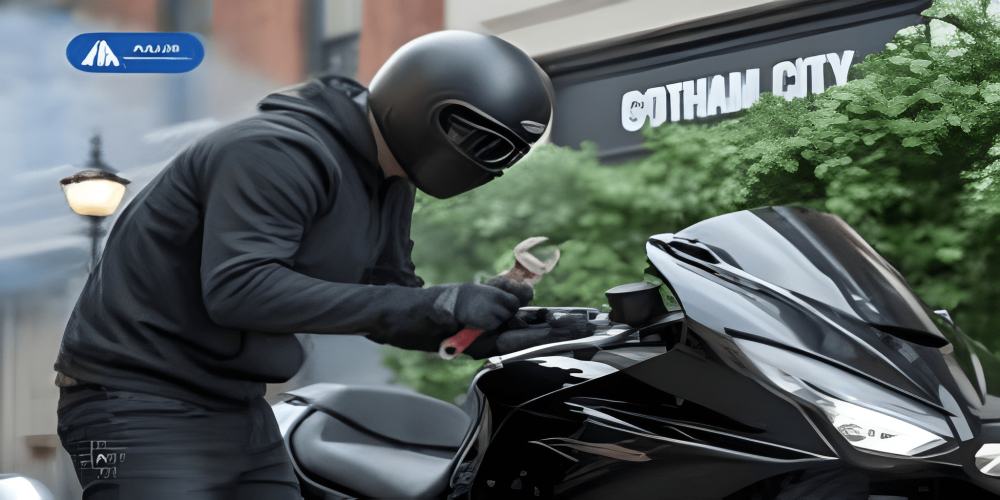
For millions of urban dwellers, students, and apartment tenants, a bicycle is more than just a recreational tool. It is a primary mode of transportation, a significant financial investment, and often a deeply personal possession. The sinking feeling of returning to an empty bike rack or a cut lock is a universal fear. When that theft occurs, the immediate question is: does renters insurance cover bike theft? The short answer is almost always yes, but the long answer involves deductibles, coverage limits, policy types, and specific fine print that every renter must understand.
This comprehensive guide will explore exactly how renters insurance cover bike theft works, what limitations exist, and how to ensure you are not left with a financial loss after your two-wheeled companion disappears.
Understanding the Basics: How Renters Insurance Applies to Bicycles
Renters insurance is designed to protect your personal property against a list of named perils, and theft is almost universally included as a primary peril. Whether your bike is stolen from a locked garage, a basement storage unit, a balcony on the third floor, or a bike rack on a busy city street, the theft peril typically triggers coverage. However, the mechanism by which renters insurance cover bike theft depends on two critical factors: location and the policy’s distinction between actual cash value (ACV) and replacement cost value (RCV).
Most standard renters policies (HO-4 forms) provide coverage for personal property anywhere in the world. This means that if your bike is stolen while you are on vacation, locked outside a coffee shop, or even in another country, your renters policy may still respond. The key word is “may,” because every policy has territorial limits and specific exclusions. Generally, for renters insurance cover bike theft off-premises, you will have the same coverage limits as you do for theft at your rented home, though some insurers apply a sub-limit for off-premises theft of high-value items like bicycles.
The Crucial Role of Deductibles and Coverage Limits
When you ask does renters insurance cover bike theft, you must immediately consider your deductible. The deductible is the amount you pay out of pocket before the insurance company contributes. If your bicycle is worth $500 and your policy has a $1,000 deductible, filing a claim would yield you $0. It would also add a claim to your record, potentially increasing future premiums. Therefore, renters insurance cover bike theft only becomes financially worthwhile when the value of the bike significantly exceeds the deductible.
For example, if you own a $3,000 electric bike or a high-end road bike, and your deductible is $500, your insurer will reimburse you up to the policy’s limit minus that $500. However, beware of standard sub-limits. Many basic renters policies impose a special limit for theft of bicycles, often ranging from $1,000 to $2,500. If your bike is worth $5,000, and your policy caps bicycle theft at $1,500, the question “does renters insurance cover bike theft” becomes a qualified yes, but only up to $1,500. To fully protect a valuable bicycle, you may need a scheduled personal property endorsement (also known as a rider or floater).
Actual Cash Value vs. Replacement Cost: A Critical Distinction
To fully understand how renters insurance cover bike theft, you must grasp the difference between actual cash value (ACV) and replacement cost value (RCV). An ACV policy reimburses you for the bike’s depreciated value. If you bought a mountain bike for $2,000 five years ago, the insurer will estimate its current value based on age, wear, and tear. You might receive only $300 to $500. An RCV policy, on the other hand, reimburses you for the cost of buying a new, comparable bike at today’s prices, minus your deductible. Most insurance advisors strongly recommend paying the slightly higher premium for RCV coverage if you want renters insurance cover bike theft to actually allow you to replace your stolen bike.
When you file a claim for a stolen bike, the insurer will ask for proof of ownership (receipts, photos, serial numbers) and a police report. They will then apply either ACV or RCV to calculate your settlement. Without a police report, many insurers will deny the claim entirely because theft requires evidence of criminal activity.
Common Scenarios: Does Location Affect Coverage?
The question does renters insurance cover bike theft often arises in specific, high-risk scenarios. Let us examine a few common situations.
Scenario One: Theft from an Apartment Garage. If your bike is stolen from a locked, shared garage in your apartment building, most policies will cover this as on-premises theft. Even if the garage door was malfunctioning or another tenant left it open, coverage typically applies. However, if the bike was left unlocked or with a cheap lock that was easily cut, negligence is generally not a disqualifying factor for theft coverage, though some policies have a “reasonable care” clause. Always lock your bike; while failure to lock may not void coverage, it can complicate the claims process.
Scenario Two: Theft from a Workplace Bike Cage. Since renters insurance cover bike theft anywhere in the world, a bike stolen from your employer’s secure bike room is covered, subject to your deductible and sub-limits. However, you should check if your employer offers any separate coverage or if your homeowner’s policy (if you have one) would take precedence. Renters insurance remains primary for your personal property regardless of location.
Scenario Three: Theft of Bike Parts or Accessories. What if only the wheels or saddle are stolen? Does renters insurance cover bike theft of components? Generally, yes. The definition of theft includes the unlawful taking of any part of the insured property. However, wear and tear or mechanical breakdown is not covered. If your quick-release wheel is stolen, that is theft. If your chain breaks due to rust, that is not. Also, if you crash your bike and damage it, that is typically not covered unless you have specific accidental damage coverage; theft and damage are distinct perils.
Exclusions: When Renters Insurance Will Not Cover Bike Theft
Despite the broad protection, there are clear circumstances where renters insurance cover bike theft will be denied. Understanding these exclusions is as important as understanding the coverage itself.
Exclusion One: Business Use. If you are a food delivery cyclist, a bike messenger, or anyone using your bicycle for commercial purposes, a standard renters policy will almost certainly exclude theft that occurs during business use. You would need a commercial inland marine policy or a business owners policy (BOP). Even a single instance of delivering food while the bike is stolen can void the claim. For example, if your bike is stolen while you are picking up a DoorDash order, your renters insurer will deny the claim because the bike was being used for income-generating activity.
Exclusion Two: Intentional Acts or Fraud. If you or a household member stages the theft or intentionally leaves the bike in a high-risk area expecting it to be stolen, coverage will be denied. Insurers investigate suspicious claims, especially for high-value bicycles.
Exclusion Three: Wear and Tear or Mysterious Disappearance. Theft requires evidence of a criminal act. If you simply forget where you parked your bike and cannot find it, that is not theft; it is a mysterious disappearance. Some policies cover mysterious disappearance, but many do not. To prove theft, you generally need a police report and a statement that the bike was forcibly taken or that you witnessed the act.
Exclusion Four: High-Value Limits on E-Bikes. Many standard policies treat electric bikes (e-bikes) differently. Some insurers classify e-bikes as motorized vehicles, which are explicitly excluded from renters insurance. Others cover e-bikes but impose a very low sub-limit, often $500 to $1,000. Before assuming renters insurance cover bike theft for an e-bike, call your insurer and ask for the specific classification. You may need a separate specialty policy for an e-bike, especially if it exceeds 750 watts or can operate without pedaling.
How to Maximize Your Coverage: Endorsements and Documentation
If you own a bicycle worth more than your policy’s standard sub-limit, you need to take proactive steps. The most effective way to ensure renters insurance cover bike theft fully is to schedule the bike as a listed personal property item. This is done by adding a personal article floater or scheduled personal property endorsement to your renters policy. For an additional premium (usually a small percentage of the bike’s value per year), you can insure the bike for its full replacement cost with no deductible and worldwide coverage, often including accidental damage, not just theft.
To schedule a bike, you will need:
- A professional appraisal or original sales receipt.
- The bike’s serial number (usually stamped under the bottom bracket).
- Photographs showing the bike’s condition and any unique features.
- Proof of a high-quality lock (some insurers offer a discount for using a gold-rated lock from Sold Secure or ART).
Without scheduling, renters insurance cover bike theft is subject to the policy’s blanket personal property limit, which is typically shared with all your other belongings (furniture, electronics, clothing). If you have $30,000 in total personal property coverage and a $2,500 sub-limit for bikes, that is the maximum you will receive for a bike theft, regardless of the bike’s actual value.
The Claims Process: Step-by-Step After a Bike Theft
When you discover your bike has been stolen, follow these steps to ensure that renters insurance cover bike theft actually results in a payout.
Step One: Immediate Action. Do not touch anything. If the lock is cut or the rack is damaged, leave it as is. Call the police immediately and obtain a police report number. The report must explicitly state that the bike was stolen (not lost or mislaid). Provide the police with the bike’s serial number, make, model, and any distinguishing features.
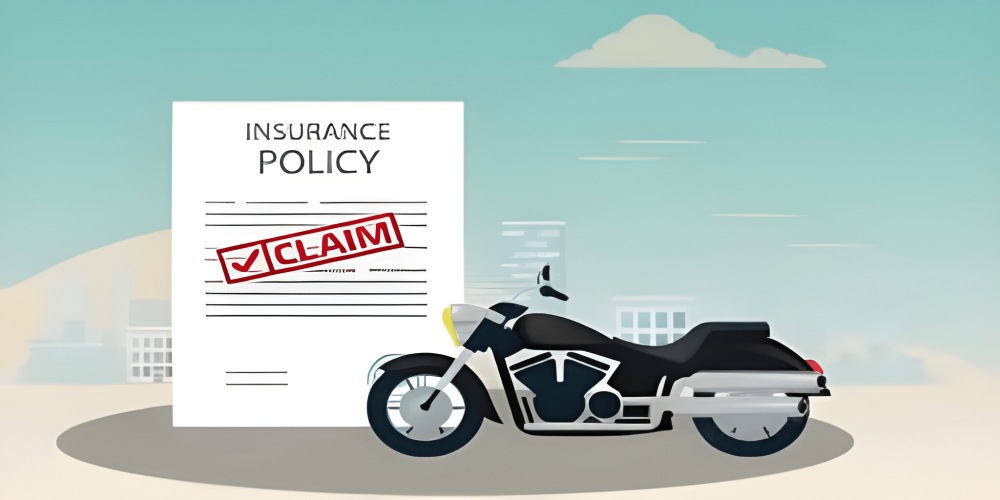
Step Two: Notify Your Insurer. Call your renters insurance company’s claims department as soon as possible. Most insurers require prompt notice. Provide them with the police report number and a detailed description of the theft. They will ask where the bike was locked, the type of lock used, and the time frame of the theft. Be honest and thorough.
Step Three: Prove Ownership and Value. Submit your documentation: receipts, credit card statements, photos of you with the bike, and any maintenance records. If you have replacement cost coverage, you may need to provide current retail listings for a comparable bike. The insurer will then calculate the settlement. If you have ACV, they will depreciate the bike. If you have RCV, they will reimburse you for the actual replacement cost after you purchase the new bike.
Step Four: Receive Payment. The insurer will issue a check for the covered amount minus your deductible. If the bike is found later, it becomes the property of the insurance company (subrogation). You cannot keep both the recovered bike and the insurance payout.
Frequently Asked Questions (FAQs)
Q1: Does renters insurance cover bike theft if the bike is stolen from my car?
Yes, in most cases. If your bike is locked on a roof rack or inside your car and the car is broken into, renters insurance cover bike theft applies. However, your auto insurance’s comprehensive coverage would cover damage to the car itself, but the bike is considered personal property, so renters insurance is primary. Be aware that some policies have a lower sub-limit for theft from a vehicle.
Q2: Does renters insurance cover bike theft on a college campus?
Generally, yes, as long as you are a renter and have an active policy. However, many student renters are covered under their parents’ homeowners or renters policy until they permanently move out. Check the policy’s definition of “resident relative.” If you live in a dormitory, your parents’ policy may still cover you, but many dorms are excluded because they are not considered a rented residence. Students living in off-campus apartments should definitely have their own renters policy to ensure renters insurance cover bike theft on campus.
Q3: Does renters insurance cover bike theft without a police report?
Almost never. The vast majority of policies explicitly require a police report as proof that a theft occurred. Without a police report, the insurer may treat the loss as a mysterious disappearance or simple loss, which is typically excluded. Always file a police report immediately, even if you think the bike is low-value.
Q4: How much does renters insurance cost to cover a $3,000 bike?
Basic renters insurance averages $15 to $30 per month for $30,000 in liability and personal property coverage. Adding a scheduled personal article floater for a $3,000 bike might add $30 to $100 per year, depending on your location and insurer. Without scheduling, that $3,000 bike might only be covered up to a $1,500 sub-limit. The cost to fully ensure renters insurance cover bike theft for a high-value bike is minimal compared to the replacement cost.
Q5: Does renters insurance cover bike theft if I leave it unlocked in my backyard?
This is a gray area. Most policies do not have an explicit “unlocked” exclusion for theft, but they do require the insured to take reasonable steps to protect property. If you leave an expensive bike unlocked in a shared or public area, the insurer might argue contributory negligence. For a private, fenced backyard, leaving it unlocked is more defensible. For a front porch or apartment hallway, leaving it unlocked could lead to a denial. To be safe, always lock your bike, even inside your own home.
Q6: Does renters insurance cover bike theft of a bike I borrowed from a friend?
No. Renters insurance only covers property that you own or for which you are legally responsible. If you borrowed a friend’s bike and it is stolen, your renters insurance will not cover it. The friend would need to file a claim under their own renters or homeowners policy. Conversely, if a friend borrows your bike and it is stolen, your policy should cover it, because you are the owner.
Q7: Does renters insurance cover bike theft if I am traveling internationally?
Most standard policies provide coverage for personal property anywhere in the world, including other countries. However, there may be a lower sub-limit for off-premises theft (e.g., 10% of the total personal property limit). Additionally, some countries are excluded due to high theft rates or political instability. Always read your policy’s “territory” clause. For expensive bicycles, international travel is a strong reason to add a scheduled endorsement that explicitly states worldwide coverage.
Q8: What is the difference between a bike locker and bike storage in my building?
If you pay extra for a dedicated, locked bike locker that is separate from your apartment, renters insurance cover bike theft from that locker the same way it covers theft from your apartment. However, if the locker is a common area with shared access, insurers may treat it as a less secure location, but theft is still covered. The key is whether the theft occurred from a location under your control. A private locker with your own lock is ideal. A communal bike room is still covered, but you should use a high-quality lock on your bike inside that room.
Final Verdict: Is Renters Insurance Enough for Your Bike?
For the average commuter with a bicycle worth $500 to $1,000, a standard renters policy with a low deductible (e.g., $250) provides excellent protection. In that scenario, renters insurance cover bike theft effectively, offering peace of mind against a common urban crime. However, for cycling enthusiasts, e-bike owners, or anyone who has invested more than $2,000 in their bicycle, the standard policy is inadequate. The sub-limits, depreciation calculations, and deductibles can leave you with a fraction of what you need.
To truly protect your ride, take three actions today: First, read your renters policy declaration page to find your bicycle sub-limit and deductible. Second, photograph your bike and record its serial number. Third, call your insurer and ask for a quote to schedule your bike as a listed item. For less than the cost of a good lock per year, you can transform the answer to the question “does renters insurance cover bike theft” from a qualified maybe into a definitive, full-value yes. Do not wait until your bike rack is empty to discover the limits of your coverage.














Leave A Comment
0 Comment