
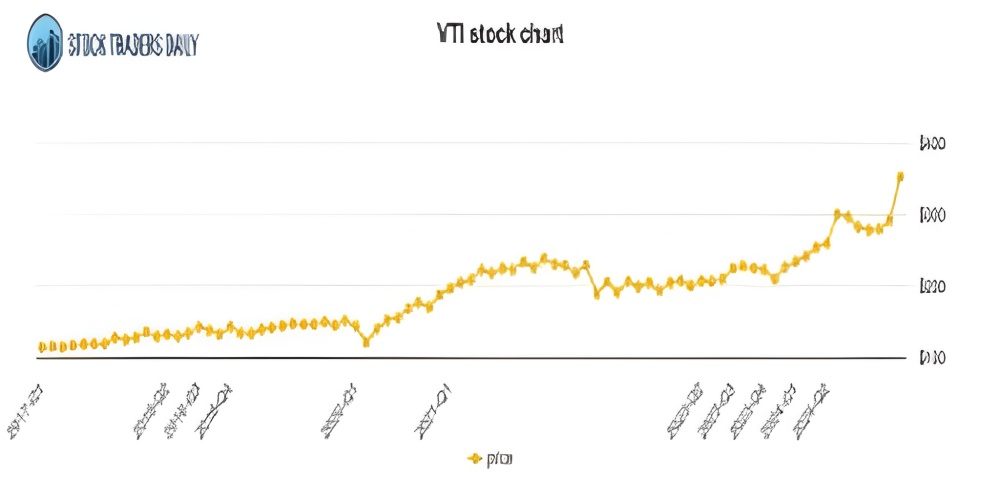
For investors seeking a simple, powerful path to building long-term wealth, the ticker symbol "VTI" represents a compelling solution. VTI is not just another stock; it is the Vanguard Total Stock Market ETF, an exchange-traded fund that has garnered a cult following among financial enthusiasts for its remarkable efficiency and comprehensive scope. In a world where professional fund managers consistently struggle to beat their benchmarks, VTI offers a nearly foolproof strategy: own everything.
By purchasing a single share of VTI stock, an investor gains fractional ownership in thousands of American corporations, from tech giants like Apple and NVIDIA to regional banks and small manufacturers. This article provides a deep dive into the VTI stock, exploring its mechanics, performance, underlying holdings, and why it remains a top choice for passive investors. We will also address frequently asked questions about this popular fund.
The Core Philosophy of VTI Stock
To understand the VTI stock, one must first appreciate the philosophy of its creator, Vanguard founder John Bogle. Bogle championed the idea that attempting to time the market or pick individual winners is a losing game for most investors due to high fees and human error. Instead, he advocated for buying the entire haystack rather than searching for the needle. The VTI stock is the purest expression of this philosophy available in a single ticker.
Unlike the more famous SPDR S&P 500 ETF Trust (SPY) or Vanguard S&P 500 ETF (VOO) , which limit themselves to 500 large-cap U.S. companies, VTI seeks to track the CRSP US Total Market Index. This index represents the entire investable U.S. stock market. When you buy VTI stock, you are not betting on a specific sector or size segment; you are placing a bet on the aggregate productivity and innovation of the entire American economy. This diversification acts as a safety net, ensuring that while a specific company may fail, the overall market continues to trend upward over the long term.
Cost Efficiency and Structure
One of the most attractive features of the VTI stock is its cost structure. The expense ratio is the fee that the fund charges to manage the portfolio, and for VTI, this ratio is an astonishingly low 0.03 percent. To put this in real terms, an investor with a portfolio value of ten thousand dollars pays only three dollars per year in management fees. This is not just low; it is rock-bottom, placing VTI among the cheapest ETFs in the world.
Low fees are the secret sauce of passive investing. They may look insignificant on paper, but over a 30-year investment horizon, a difference of 0.50 percent in fees can eat away tens of thousands of dollars in potential growth due to the magic of compound interest. By keeping expenses minimal, VTI ensures that investors keep almost all of the market's returns. The fund is issued by Vanguard, a firm uniquely structured to be owned by its funds, which in turn are owned by the shareholders. This alignment of interests means that when VTI stock performs well and keeps costs low, Vanguard’s customers benefit directly.
Breaking Down the Portfolio Holdings
While VTI holds over 3,500 individual stocks, it is a market-cap-weighted fund. This means the largest companies make up the largest percentages of the fund. Consequently, the performance of the VTI stock is heavily influenced by the so-called "Magnificent Seven" and the technology sector.
As of the most recent data, the top ten holdings of the VTI stock constitute approximately 33 to 35 percent of the entire portfolio. This concentration is a feature of the index, not a bug. The largest holding is currently NVIDIA Corporation (NVDA) , reflecting the massive market surge in artificial intelligence hardware. It is followed closely by Apple (AAPL) and Microsoft (MSFT) .
The portfolio allocation in VTI is not limited to tech, however. The fund is balanced across the economy. According to the data, while technology leads at over 30 percent, the fund also holds substantial positions in consumer discretionary, industrials, financial services, and healthcare. Here is a detailed breakdown of the sector weighting within the VTI stock:
|
Sector |
Weight Percentage |
|
Technology |
32% to 36% |
|
Consumer Discretionary |
13% to 14% |
|
Industrials |
13% |
|
Financial Services |
10% to 12% |
|
Healthcare |
9% to 10% |
|
Consumer Staples |
~4% |
|
Energy |
~4% |
|
Utilities |
~3% |
|
Real Estate |
~2% |
Data compiled from recent fund reports .
This diversification provides a buffer against sector-specific downturns. If technology stocks fall out of favor, a rise in healthcare or industrial stocks can offset the losses within the VTI stock portfolio.
VTI Stock Performance Metrics
Evaluating the performance of an index fund like VTI requires looking at total return, which includes both price appreciation and dividend reinvestment. The VTI stock pays a modest dividend, currently yielding approximately 1.12 to 1.17 percent. While not an income powerhouse, this dividend provides a steady cash flow or reinvestment fuel for the portfolio.
Historically, the total stock market has returned approximately 9 to 10 percent annually over long periods. VTI has successfully mirrored this. Over the past decade ending in 2025, the fund delivered an annualized return of roughly 14.3 percent, a figure boosted by the historic bull run in mega-cap tech stocks. The one-year trailing return as of 2026 was also robust, clocking in near 37 percent, which is virtually identical to the S&P 500. This parity suggests that while VTI owns small caps, their effect on overall return is muted by the sheer weight of the large caps.
Investors should note the beta of the VTI stock. It generally maintains a beta of around 1.01 to 1.04. This means the fund is expected to move in nearly perfect lockstep with the broad stock market. If the market goes up, VTI goes up. If the market crashes, VTI will crash with it. This is not a downside; it is a feature of total market exposure that ensures no tracking error versus the investor's actual benchmark.
VTI vs. The Competition
When analyzing VTI stock, it is impossible to ignore its closest rival: the iShares Core S&P Total US Stock Market ETF (ITOT) . Both funds aim to do the same thing, and they do it with identical expense ratios of 0.03 percent. For the average retail investor, the differences are negligible. However, a few distinctions might sway a decision.
First, VTI is substantially larger. With over 2 trillion dollars in assets under management, VTI is one of the largest ETFs on the planet. This massive size provides incredible liquidity, meaning bid-ask spreads are razor-thin, which is efficient for buying and selling. ITOT, while still very liquid, has a significantly smaller asset base. Second, VTI holds about 1,000 more stocks than ITOT. While these micro-cap additions barely move the needle on performance, purists argue that VTI offers a more complete representation of the market. Lastly, VTI historically has a slightly higher dividend yield, though the difference is only a few basis points.
Another competitor is the Vanguard S&P 500 ETF (VOO) . While VOO is cheaper by a basis point in some cases, it lacks the small and mid-cap exposure found in VTI. In a decade where large caps have dominated, VTI and VOO have produced nearly identical returns. However, if a period of small-cap outperformance occurs in the future, VTI is positioned to capture that alpha, while VOO would miss it entirely.
Tax Efficiency and Suitability
For taxable brokerage accounts, the VTI stock is a highly tax-efficient vehicle. Index funds like VTI generally have very low portfolio turnover—meaning the manager does not buy and sell stocks frequently. In 2025, the turnover rate for VTI was extremely low, which results in fewer capital gains distributions to shareholders. This allows the investor to defer taxes until they sell their shares, a feature known as tax efficiency.
VTI is suitable for almost any type of investor. For the "set it and forget it" retirement saver, buying VTI monthly provides instant diversification without needing a financial advisor. For younger investors, VTI offers growth potential. For those nearing retirement, VTI provides market returns without the idiosyncratic risk of holding a single stock like Tesla or Boeing.
It is also worth noting the difference between the ETF and the mutual fund versions of Vanguard Total Stock Market. The Admiral Shares mutual fund shares have the same low expense ratio, but the ETF (VTI) is often preferred because it trades intraday on the NYSEARCA exchange, offers greater tax efficiency, and has lower investment minimums.
Pros and Risks of Investing in VTI
Like any investment, the VTI stock has a specific set of advantages and drawbacks. Understanding these is crucial for portfolio construction.
Advantages of VTI Stock
The most significant advantage is diversification. By holding over three thousand stocks, VTI eliminates company-specific risk. If a particular holding goes bankrupt, it barely registers a blip on the fund's performance. Second is cost. An expense ratio of 0.03 percent is nearly unbeatable, maximizing long-term compounding. Third is simplicity. An investor can achieve a fully diversified U.S. equity allocation with one single ticker symbol. Fourth is transparency. You know exactly what you own because it is everything.
Potential Risks of VTI Stock
Despite its diversification, VTI is susceptible to systemic market risk. During the Financial Crisis of 2008 or the COVID crash of 2020, VTI fell by over 30 percent. It cannot hide in a bear market. Secondly, there is concentration risk in the top holdings. Because it is market-cap weighted, VTI is currently heavily reliant on the continued success of tech giants like Microsoft and NVIDIA. While these are fantastic businesses, having one third of the fund in ten stocks creates a vulnerability. If the tech sector experiences a bubble burst, VTI will suffer significant losses.
The Verdict on VTI Stock
The VTI stock represents the winning strategy index investing. It requires no research into individual income statements, no prediction of interest rate movements, and no anxiety about missing the next big IPO. By buying VTI, you are guaranteed the market's average return. While that might sound mundane, it is statistically superior to the majority of active fund managers over a 20-year period.
For the core of a long-term portfolio, the VTI stock is arguably the perfect holding. It aligns the investor's interests with the long-term growth of the United States economy. While the price today might fluctuate wildly due to news cycles or Federal Reserve policy, the intrinsic value of owning a slice of every public company in America remains unparalleled. Whether the market moves up or down, the holder of VTI stock knows they are participating fully in the journey.
Frequently Asked Questions (FAQs)
Q1: What is the difference between VTI and VOO stock?
The primary difference is the scope of holdings. The VTI stock includes small, mid, and large-cap companies, covering the entire U.S. stock market (over 3,500 stocks). The VOO stock specifically tracks the S&P 500, limiting itself to 500 large-cap U.S. companies. Historically, their returns have been very similar, but VTI offers exposure to smaller companies that VOO misses.
Q2: What is the expense ratio for the VTI stock?
The VTI stock has an extremely low expense ratio of 0.03 percent. This means that for every ten thousand dollars invested, an investor pays approximately three dollars per year in fund management fees.
Q3: Does VTI pay dividends?
Yes, the VTI stock pays a quarterly dividend. The dividend yield has recently hovered around 1.12 to 1.17 percent. The fund distributes dividends four times per year, typically in March, June, September, and December.
Q4: What index does the VTI stock track?
The VTI stock tracks the CRSP US Total Market Index. This index is designed to capture the entire investable U.S. stock market, representing approximately 100 percent of U.S. equities. It includes large, mid, small, and micro-cap stocks regularly.
Q5: Are the holdings in VTI diversified across sectors?
Yes, while technology carries the highest weight at over 30 percent, the VTI stock is heavily diversified. It includes substantial allocations to consumer discretionary, industrials, financials, healthcare, and other sectors, ensuring no single non-tech industry can break the portfolio.
Q6: Is VTI a good investment for retirement accounts?
For most investors, the VTI stock is an excellent core holding for retirement accounts such as IRAs or 401(k)s. Its low cost, broad diversification, and high liquidity make it ideal for long-term, buy-and-hold strategies aimed at accumulating wealth over decades.
Q7: How volatile is the VTI stock?
The VTI stock exhibits volatility very similar to the overall stock market. It carries a beta of approximately 1.0. The fund experienced a maximum drawdown of roughly -25 percent over the five years leading up to 2026. Investors should be comfortable with short-term losses for long-term gains.
Q8: What is the price target for VTI stock?
Because VTI is a basket of thousands of stocks, analysts aggregate price targets based on the holdings. The aggregated price target varies, but as of mid-2026, some models predicted an average target around 350 dollars for the near term, though aggregate price targets are fluid and change as underlying holdings report earnings.

















Leave A Comment
0 Comment