
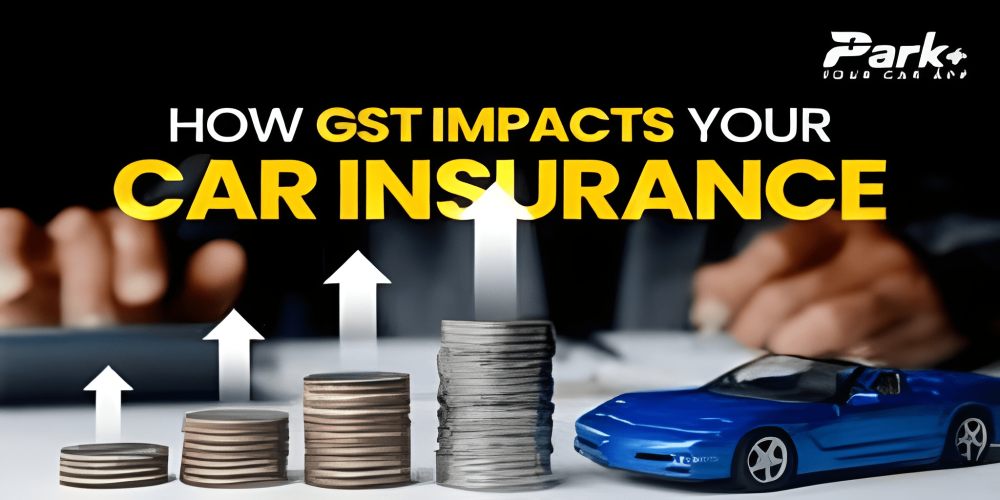
The Goods and Services Tax (GST) regime was introduced in India in 2017, and over the years it has undergone several changes with reforms under GST 2.0 bringing structural transformation to many sectors. But, one common question is aghast in the mind of car insurance policyholders: What is the rate of GST on car insurances? For every vehicle owner, this is an important taxation aspect to consider, as it has a direct impact on the total amount paid as a premium and affects financial planning for both new car buyers and existing policy renewers.
The GST rates on car insurance has been widely debated, especially after the massive tax reforms brought in place during September 2025. Government rolled out comprehensive changes by reducing the GST on small cars and giving exemption to health and life insurance, car insurance premiums still have to pay normal 18% GST rate. Such apparent inconsistency has left many policyholders baffled over what they are being charged for, and why.
This article provides a detailed break down of the GST on car insurance, as well as how it affects different types of policies separately, but first and foremost we will explain in simple terms the taxation structure for now and how pricing reductions at the auto manufacturer's end affect your premium prices indirectly. The only caveat is that businesses can claim an input tax credit under certain conditions. You will have a comprehensive grasp of the GST rate on car insurance and how to approach the taxation schemes for your automobile insurance needs by the conclusion of this article.
Existing GST Rate on the Car Insurance Premium
GST on car insurance remains fixed at 18 percent for all kinds of motor vehicle insurance policies as of 2026. This uniform tax rate will apply whether you are purchasing a new policy, renewing your existing plan or adding optional covers to better protect you. The 18% GST is calculated on the base premium, which includes both the own-damage component and third-party liability component.
So, how does this actually work in the real world? GST would be ₹2,700 (18% of ₹15,000), so total premium amount payable would be ₹17,700. The calculation is the same for all insurers and policies since the GST of 18% on car insurance is prescribed by the government and applied uniformly across India.
For intra-state transactions, a total of 18% GST on an automobile insurance in India consists of two parts- Central GST (also referred to as CGST) and State GST (also referred to as SGST), at the rate of 9% each. Integrated GST (IGST) at the rate of 18% is levied on it for inter-state transactions. This bifurcation ensures that both the central and state government gets their respective share of tax revenue derived from the insurance premiums collected.
It is worth mentioning that GST rate on car insurance is charged on the total premium amount including add-on covers such as zero depreciation cover, engine protection, roadside assistance, and return to invoice cover. There is no difference in taxation of compulsory third-party insurance and voluntary comprehensive cover — both attract 18% GST.
GST Changes — What you can expect and what not to expect
In September 2025, year 2025 was a watershed moment in the Indian indirect tax landscape with the implementation of GST 2.0 reforms. While these reforms led to several changes in the taxation of automobiles and select services, there was one glaring thing that did not change — the GST rate on car insurance.
“Restructuring of GST rates for passenger vehicles was one of the most transformative change. As per the new framework, small petrol cars (engine capacity up to 1200 cc and length less than 4 meters) and small diesel cars (engine capacity up to 1500 cc and length less than 4 meters) will now be paying 18% GST as compared to the earlier tax rate of 28% plus cess. A 40% GST was levied on mid-size cars, SUVs and luxury vehicles having larger engine capacities. The concessional 5% GST rate continues for electric vehicles.
On the other hand, in a separate but notable development, the government also exempted health and life insurance premiums from GST and lowered them to 0% for individual policies with effect from September 2025. This was largely welcomed move and most people speculated that the GST rate on car insurance will also reduce. Motor insurance is, however, not included as part of this exemption and continues to be liable for the standard 18% tax rate.
Conclusion: The GST rate on car insurance is not been reduced to 18% because it falls under the category of general insurance services specified at the GST level. Motor insurance is not such an essential service and remains in the 18% slab, unlike health and life insurance that have been extended tax relief. Moreover, government focus with GST 2.0 reforms was mainly on goods (automobiles) and not so much with services (insurance).
Fourth-Impact of GST on Insurance Premiums
The GST rate on car insurance, per se, hasn't reduced but a slightly indirect route related to what is INSURED DECLARED VALUE (IDV) allows new car buyers to benifit from lower insurance/public liability. The IDV is the market value of a car, and it forms the basis for calculating the own-damage part of the insurance premium.
For instance, when GST on cars was cut from 28% to 18% for smaller vehicles, these cars saw a reduction in their ex-showroom prices as well. Since IDV has a direct relationship with the ex-showroom price of a vehicle, cars that are available for lesser prices will also have a lower IDV associated at the time of purchase. Thus, the own-damage premium, which is calculated as a percentage of the IDV, will be marginally lower.
This is merely a reduction in the base premium because of the low insured value of the vehicle and not a GST rate cut on car insurance itself. The reduced premium amount is still subject to an 18% GST. So the savings come from a lower sum insured — not any change in the tax treatment of insurance services.
This benefit is only available to new car buyers who are buying a vehicle that meets the reduced GST tax rate. The prices of existing vehicle owners renewing their policies will not drop sharply in collection because the insurance provider calculations do not consider the latest model ex-showroom price but derive on IDV based on its original purchase price and depreciation over time.
The third party cover of the car insurance is not impacted at all by these changes. Third-party premiums are decided by the Insurance Regulatory and Development Authority of India (IRDAI) for the entire class of vehicles according to engine capacity or battery size, rather than being related to market value. As a result, even buyers of a new car will not see a reduction in this segment of their premium.
What makes a car insurance policy and its associated GST different?
The 18% GST rate on car insurance is uniform for all categories of motor insurance policies, but knowing the composition of your premium can give you a better understanding of the total tax bill.
Third-party car insurance, a requirement according to the Motor Vehicles Act, compensates the policyholder for any legal liability from injury or death of a third party as well as damage to their property. The IRDAI determines the premium to be paid for third-party insurance, and it is based on a vehicle’s engine capacity in case of traditional vehicles and battery capacity for electric vehicles. The higher 18% GST rate on car insurance applies to this regulated premium as well, and thus even the compulsory portion of your insurance is affected by a tax.
A comprehensive car insurance policy includes both third-party liability coverage and own damage cover for the insured vehicle. This is where the IDV-linked calculation comes into play: both own-damage components – and as stated earlier, this section may see indirect cuts for new car buyers. But the GST rate on car insurance, which is for comprehensive plans, continues to be 18% levied on combined premium.
Rider or Add-on covers: provides wider coverage than the base policy. The most common add-ons are zero depreciation cover, engine protection cover, roadside assistance, return to invoice cover and consumables cover. Each of these Add-ons has its premium, and the GST on car insurance is charged on the total premium of all selected Add-ons at a uniform rate of 18%.
Standalone own-damage policies that cover only damage to the vehicle they insure, without coverage for third-party liability, come under 18% GST rate on car insurance. Such policies are usually bought by owners on whose third party insurance is a live, but want to protect their own vehicles.
GST Input Tax Credit: Is GST on Car Insurance Claimable by Businesses?
The GST rate on car insurance is one of the most frequently asked questions and its eligibility regarding Input Tax Credit or ITC. The answer to this question greatly depends on the type of use and registration status of insured vehicle.
As per the guidelines for individual policyholders who use their vehicle for personal use, there is nowhere you can claim an ITC on the GST paid on your car insurance. As per Section 17(5) of the Central Goods and Services Tax Act, input tax credit on services related to motor vehicle is clearly blocked in respect of passenger vehicles with seating capacity up to 13 persons—this captures all standard private cars. This implies the 18% GST is an end cost, which cannot be claimed back for salaried people and individual car users.
ITC can be claimed by businesses or GST-registered entities if certain criteria are met. The insured vehicle is used for business purposes such as:
Commercially transporting passengers
Delivery of goods
Driver training operations
Resale of vehicles
Then, the GST paid on insurance premiums may be eligible as input tax credit.
Commercial vehicles and passenger vehicles whose seating capacity is more than 13 persons shall also be eligible for ITC. Where input tax credit is allowed The GST paid on the premium of insurance can be claimed as credit against the output tax liability while filing GST returns which results in lesser effective burden of tax for that business.
ITC can only be claimed if the policyholder is GST-registered and has appropriate documentation to prove that it is being used for business purposes. A good tax advisor will be able to ascertain if someone qualifies for this based on individual circumstances.
GST applicable on Used Cars and Second-Hand Vehicle Insurance
GST on car insurance for used or second-hand cars are subjected to the same taxation structure of 18% as in the case of new vehicles. GST treatment on insurance premiums is the same irrespective of whether the vehicle is new or second-hand. This same 18% is applied to the base premium, regardless of how old or when the vehicle was purchased.
However, it should be noted that the GST on second-hand car sale works differently. Therefore, the GST-registered dealers selling used cars should charge 18% GST only on the margin (difference between purchase price and selling price) instead of charging it on the complete transaction value. This is in terms of the transaction of the vehicle itself and not to insurance premium.
For owners of pre-owned automobiles, the insurance premium is determined on the basis of IDV fixed by the insurer, which considers vehicle age, condition as well as prevailing market value. Now, the GST rate on car insurance applies 18% to this calculated premium.
Future Outlook: Will There Be Changes to GST Rate on Car Insurance?
With the recent exemption of health and life insurance from GST, as well as a more broad rationalization of tax rates under GST 2.0, many policyholders believe that the GST on car insurance might one day come down. Although no formal cut has yet been announced, there are several factors that could impact future decisions made by the GST Council.
The administration's willingness to rationalise taxes on crucial services is already evidenced with health and life insurance exemption. Motor insurance is dealt with very differently, however — it is compulsory and protects property rather than life or health. One must also consider the revenue impact of lowering GST rate to car insurance owing to significant number of vehicles on Indian roads.
Now, any announcement for a change in the GST rate on car insurance, if and when proposed, would be made during such a meeting of the GST Council and would become effective from a future date (as the reforms were done in September 2025). Policyholders encouraged to read information from official government announcements and reputable insurance sources rather than rumour mills.
Frequently Asked Questions
Q1: What is the applicable GST on car insurance in India?
GST rates on car insurance currently stand at 18% for all categories of motor vehicle policies, such as third-party policies, comprehensive covers, standalone own-damage cover and all add-on covers.
Answer 2: In the case of car insurance, the 18% GST applies to both new and renewal policies.
Yes, the 18% GST charge for the car insurance is applicable equally on new policies as well as renewals. There is no difference in tax treatment for new purchases versus renewals.
Q3: Do you have to pay GST on car insurance even if it is third-party premiums?
Third-party insurance premiums also draw the 18% GST rate on car insurance. The mandatory third-party insurance, for which the premiums are regulated by IRDAI, is taxed at the same rate as comprehensive insurances.
Q4 — Is GST paid for car insurance eligible for claiming input tax credit?
Individual policyholders who use vehicles for personal purposes : ITC not allowed. In case of the insured vehicle being used for business, GST-registered businesses or entities can claim ITC where vehicles are not against transportation of passengers, delivery of goods and driver training.
Q5: Why is car insurance not exempted from GST while health and life insurance have been?
As part of GST 2.0 reforms from September 2025 health and life insurance was exempted from GST | Recognised it as essential services. Car insurance, being a general insurance service in the standard tax slab, will continue to attract 18% GST.
Q6: With the decreased GST on vehicles, how does this impact my car insurance premium?
For new car buyers, the reduced GST on small cars not only brings down the ex-showroom price but also reduces its Insured Declared Value (IDV). Since own-damage premiums depend on IDV, the base premium may be reduced slightly but the 18% GST of premium-on-car insurance per vehicle remains constant.
Q7: Is GST applicable on add on covers in car insurance?
Yes, I would like to add that zero-depreciation cover, engine protection, roadside assistance and return to invoice are all add-on covers under car insurance policies that also attract 18% GST. The tax is applicable to the aggregative premium amount all selected add-ons.
Q8: Are GST rate same for private cars and commercial vehicles?
In both private and commercial car insurance, the GST rate is 18%. On the other hand, commercial fleet owners or businesses that insure vehicles used for business purposes can avail of Input Tax Credit in this context, which a private vehicle owner cannot.
Q9: When was the GST rate on car insurance changed last?
Since the introduction of GST in 2017, the GST rate on car insurance has not changed and is still 18%. Although the GST 2.0 reforms in September, 2025 brought about significant changes to automobile taxation and exempted health and life insurance, no changes were made to the GST rate on car insurance.
Q10: Will the GST rate on car insurance ever be decreased?
Although no formal cut has been announced, goods and services tax (GST) rates are revised by a council in periodic reviews. To the extent that there has been a trend to rationalise taxes on essential services recently, it cannot be ruled out in future that this reduction may eventually be introduced, but policyholders should not rely on any imminent change and decisions should be based on current rates.
Conclusion
In addition, the GST rate charged on car insurance is still pegged at 18 percent which also continues the same taxation structure from when GST was introduced way back in 2017. Despite the meaningful GST 2.0 reforms that took effect from September 2025, and brought welcome reductions in car prices and exemptions of health and life insurance, motor insurance premiums remained saddled with the standard rate of tax applied to taxable supplies of goods and services under the GST Act.
For existing vehicle owners, the premiums calculation is not affected and 18% GST will be applied on to the base premium, every time renewal takes place. But there is a silver lining for new car purchasers. This cuts the ex-showroom prices of small cars, along with a diminished IDV and thus a drop in the own-damage part of the insurance premium. Though the 18% GST on car insurance continues, the overall outflow for the premiums could be marginally lower than it would have been under previous structure of taxes.














Leave A Comment
0 Comment