
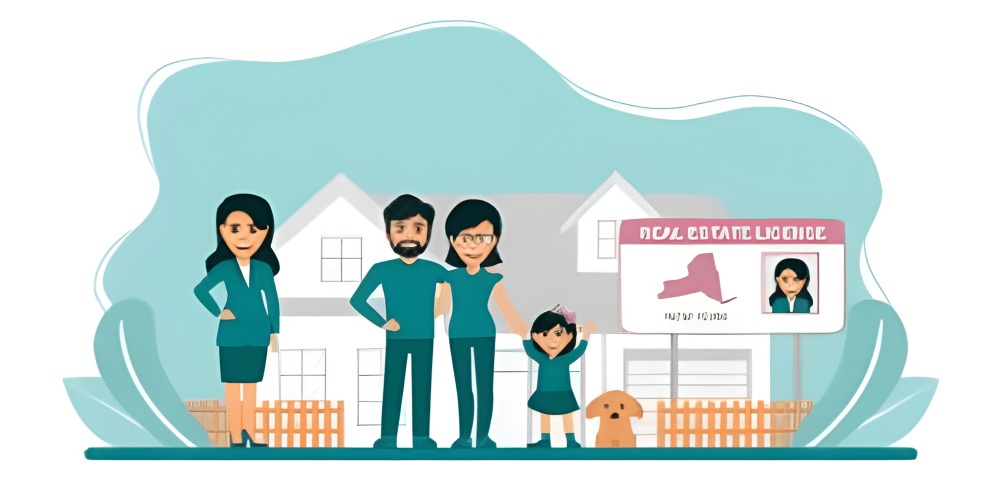
If you want to build a career in property sales, rentals, or real estate investments, getting a New York State real estate license is your first step. New York offers one of the most dynamic real estate markets in the world, from the fast-paced transactions of New York City to suburban growth across New York.
This detailed guide explains everything you need to know about earning your New York State real estate license, including eligibility, coursework, exam details, application steps, costs, renewals, and career opportunities.
What Is a New York State Real Estate License?
A New York State real estate license is an official authorization issued by the New York State Department of State that allows individuals to legally act as real estate salespersons or brokers within the state.
Without a valid New York State real estate license, you cannot:
- Represent buyers or sellers in property transactions
- Earn commissions from property sales or leases
- Advertise yourself as a licensed real estate agent
- Conduct negotiations for compensation
There are two primary types of licenses:
- Real Estate Salesperson License
- Real Estate Broker License
Most people start by earning a New York State real estate license as a salesperson before advancing to broker status.
Why Get a New York State Real Estate License?
There are several strong reasons to pursue a New York State real estate license:
1. High Income Potential
Real estate commissions in New York are among the highest in the country. Even a few transactions per year can generate significant income.
2. Flexible Career Path
Once you obtain your New York State real estate license, you can work full-time, part-time, or even build your own brokerage in the future.
3. Diverse Markets
From luxury apartments in New York City to waterfront homes in Buffalo and suburban developments in Albany, the opportunities are vast.
4. Career Stability
Housing demand remains steady, making the New York State real estate license a valuable long-term professional credential.
Eligibility Requirements for a New York State Real Estate License
Before applying for a New York State real estate license, you must meet specific requirements.
Age Requirement
You must be at least 18 years old.
Education Requirement
You must complete a 77-hour pre-licensing course approved by the New York State Department of State.
Exam Requirement
You must pass the official New York State real estate licensing exam.
Sponsorship
To activate your New York State real estate license, you must work under a licensed broker.
Step-by-Step Process to Get a New York State Real Estate License
Step 1: Complete the 77-Hour Pre-Licensing Course
The first requirement for a New York State real estate license is completing 77 hours of approved coursework. This can be done online or in person.
The course typically covers:
- Real estate law
- Agency relationships
- Contracts
- Property ownership
- Fair housing laws
- Environmental regulations
- Financing basics
- Ethics
This training prepares you for both the state exam and real-world transactions.
Step 2: Schedule and Pass the State Exam
After completing the course, you must register for the licensing exam through the New York State Department of State website.
The exam includes:
- Multiple-choice questions
- State-specific real estate laws
- National real estate principles
To pass and move forward with your New York State real estate license, you must achieve the required passing score.
Step 3: Find a Sponsoring Broker
You cannot activate your New York State real estate license without working under a licensed real estate broker.
Choosing the right broker is critical. Look for:
- Training support
- Commission structure
- Marketing tools
- Mentorship programs
- Company reputation
Many new agents start in major markets like New York City, but suburban and upstate markets also offer strong opportunities.
Step 4: Submit Your Application
Once you pass the exam and secure a broker, you can apply for your New York State real estate license online.
You’ll need:
- Proof of course completion
- Exam results
- Broker sponsorship
- Application fee
After approval, your New York State real estate license becomes active.
Cost of a New York State Real Estate License
The total cost to obtain a New York State real estate license generally includes:
- Pre-licensing course fee
- Exam fee
- License application fee
- Study materials
Overall, most candidates spend between $300 and $700 depending on their course provider.
How Long Does It Take?
You can earn your New York State real estate license in as little as 2 to 3 months if you:
- Complete the course quickly
- Pass the exam on your first attempt
- Secure a broker promptly
Some candidates finish even faster if they study full-time.
Real Estate Broker License in New York
After gaining experience as a salesperson, you may upgrade to a broker license.
To become a broker in New York, you must:
- Be at least 20 years old
- Have two years of experience as a licensed salesperson
- Complete additional education
- Pass the broker exam
A broker-level New York State real estate license allows you to:
- Open your own brokerage
- Hire agents
- Earn override commissions
Renewing Your New York State Real Estate License
A New York State real estate license is valid for two years.
To renew, you must:
- Complete 22.5 hours of continuing education
- Submit renewal application
- Pay renewal fee
Failing to renew on time may result in penalties or inactive status.
Continuing Education Requirements
Continuing education is mandatory to maintain your New York State real estate license.
Courses may include:
- Fair housing updates
- Ethics training
- Legal changes
- Agency law updates
- Emerging real estate trends
Keeping your New York State real estate license active ensures uninterrupted business operations.
Career Opportunities After Getting Licensed
Once you obtain your New York State real estate license, you can specialize in:
Residential Sales
Helping families buy and sell homes.
Commercial Real Estate
Office buildings, retail spaces, and industrial properties.
Property Management
Managing rental properties for investors.
Luxury Real Estate
High-end properties in areas like New York City.
Real Estate Investment Consulting
Advising clients on profitable property investments.
Income Potential with a New York State Real Estate License
Income varies depending on:
- Market location
- Commission structure
- Experience level
- Marketing strategy
- Client network
Agents in metropolitan markets such as New York City often earn higher commissions due to property values.
However, suburban and upstate markets can also provide steady income opportunities.
Tips to Pass the New York State Real Estate Exam
Here are practical strategies:
- Review key definitions daily
- Take practice exams
- Focus on state-specific laws
- Study agency relationships carefully
- Understand math calculations
Passing on your first attempt speeds up your New York State real estate license approval process.
Common Mistakes to Avoid
When applying for a New York State real estate license, avoid:
- Skipping required education hours
- Missing exam deadlines
- Choosing the wrong broker
- Ignoring continuing education
- Letting the license expire
Preparation and organization make the process smoother.
Online vs In-Person Courses
Many approved schools offer online options for the New York State real estate license course.
Online courses offer:
- Flexibility
- Self-paced learning
- Lower costs
In-person classes provide:
- Structured schedule
- Instructor interaction
- Peer networking
Both methods lead to the same New York State real estate license.
Is a New York State Real Estate License Worth It?
For individuals seeking flexibility, income potential, and entrepreneurial freedom, the New York State real estate license is highly valuable.
It allows you to:
- Control your schedule
- Build your own client base
- Earn commission-based income
- Enter a competitive but rewarding industry
With proper marketing and dedication, a New York State real estate license can become a powerful long-term career asset.
FAQs About New York State Real Estate License
1. How hard is it to get a New York State real estate license?
It requires dedication but is manageable. Completing the 77-hour course and studying properly greatly increases your chances of passing the exam.
2. How long is a New York State real estate license valid?
A New York State real estate license is valid for two years before renewal is required.
3. Can I get a New York State real estate license online?
Yes. You can complete the pre-licensing education online through approved providers.
4. How much does a New York State real estate license cost?
Most candidates spend between $300 and $700 including course fees, exam fees, and application fees.
5. Do I need a broker to activate my New York State real estate license?
Yes. You must have a sponsoring broker before your license becomes active.
6. Can I work part-time with a New York State real estate license?
Yes. Many agents start part-time while transitioning into full-time real estate careers.
7. What happens if my New York State real estate license expires?
You may need to complete renewal requirements and pay late fees. If it remains expired too long, you may need to reapply.
8. Can I transfer my real estate license to New York from another state?
New York offers limited reciprocity agreements with certain states. You may still need to meet specific requirements.
Final Thoughts
Earning a New York State real estate license opens the door to one of the most active property markets in the United States. Whether you aim to sell residential homes, commercial spaces, or luxury properties, this license is your foundation.
















Leave A Comment
0 Comment