
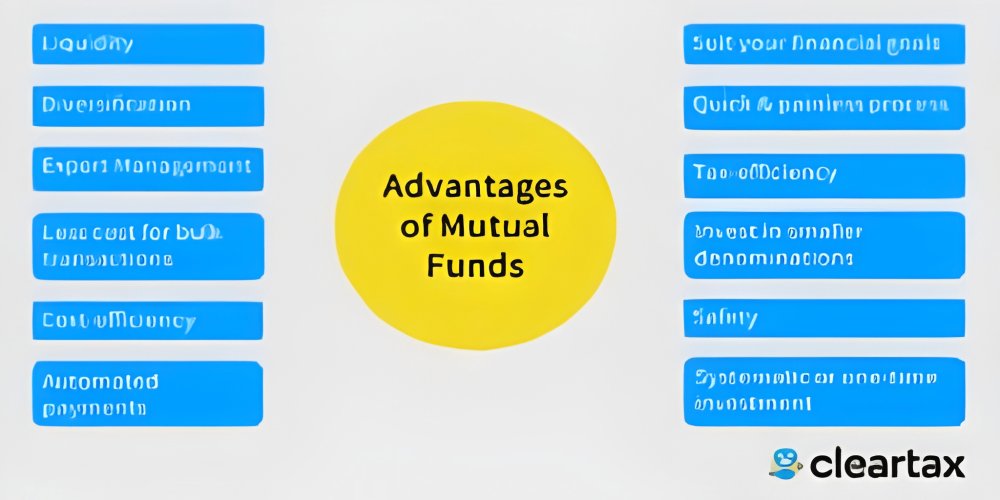
Let me tell you something they don't teach you in school. You don't need to be rich to start getting rich. For the longest time, I believed that investing was only for people who wore suits to work and had last names like Buffett or Dimon. I was wrong. Dead wrong. And the reason I was wrong comes down to one simple thing that changed everything for me: learning the real advantages of mutual funds.
I remember sitting in my kitchen three years ago, scrolling through my bank account, feeling that familiar panic. I had some money saved, sure. But it was just sitting there. Earning basically nothing. I thought about buying individual stocks. Then I thought about the horror stories. My uncle bought shares in a hot airline company back in 2019. He lost forty percent of his money in six months because he put all his eggs in that one basket. I didn't want that life.
Then a friend who works in finance said something that stuck with me. She said, "You don't have to pick winners. Just buy the whole damn market." That was my introduction to mutual funds. And once I started digging into the advantages of mutual funds, I realized that this wasn't some fancy Wall Street trick. It was just common sense dressed up in a tie.
You Get a Team of Experts Without the Huge Price Tag
Let's be honest for a second. Do you really have time to read quarterly earnings reports? Do you wake up on Tuesday mornings excited to analyze price-to-earnings ratios of mid-cap pharmaceutical companies? No. Nobody does. That stuff is boring. It is also incredibly time consuming.
Here is where one of the biggest advantages of mutual funds jumps right out at you. When you put your money into a mutual fund, you are essentially hiring a full time professional money manager. These are people who eat, sleep, and breathe the markets. They have research teams. They have analytical software that would cost you thousands of dollars per month. They have direct access to company executives during earnings calls.
And what does this cost you? A tiny fraction of your investment. Usually less than one percent per year. Think about that. For less than the price of a Netflix subscription, you get a team of Harvard educated finance experts working their tails off to make sure your money grows. Try to hire a personal wealth manager for that price. You cannot. It is simply not possible.
I am not a professional investor. I am a person with a job and a life and limited brain space for complicated things. The advantages of mutual funds mean I do not have to become a professional. I just have to be smart enough to let the professionals do their job while I do mine.
Spreading Your Risk So One Bad Bet Does Not Ruin You
There is an old saying in the investing world. Do not put all your eggs in one basket. This sounds simple. But you would be shocked how many people ignore it. They hear their brother in law talking about some hot new electric vehicle company, and suddenly their entire savings are riding on that one stock.
I watched a neighbor do this last year. He went all in on a well known social media stock. Then the company had a bad quarter. Just one bad quarter. His account dropped thirty percent in fourteen days. He could not sleep. He sold at the bottom out of pure fear. That is what happens when you lack diversification.
Now let me explain why the advantages of mutual funds solve this problem completely. When you buy a mutual fund, your money does not go to one company. It does not go to five companies. It goes to dozens or even hundreds of different companies. A good equity mutual fund might hold shares in technology firms like Apple and Microsoft right alongside healthcare giants like Johnson and Johnson and energy companies like Chevron.
Why does this matter? Because markets move in mysterious ways. When technology stocks drop, healthcare stocks often rise. When the American market struggles, international markets sometimes boom. By owning a little bit of everything, you smooth out the bumps. You will not get rich overnight. But you also will not go broke overnight. For normal people who need their savings to actually be there when they retire, this even keel is absolutely essential.
The advantages of mutual funds around diversification are so powerful that famous investors call diversification the only free lunch in finance. You get reduced risk without sacrificing returns. That is not magic. That is math.
Starting Small Is Not Just Possible. It Is Encouraged.
Here is where the old guard of investing gets completely destroyed by mutual funds. Back in the day, if you wanted to build a diversified portfolio on your own, you needed serious cash. Buying one hundred shares of a solid company might cost you five thousand dollars. Buying ten different companies to get proper diversification might cost you fifty thousand dollars. Who has that kind of money just lying around? Almost nobody.
Now look at the advantages of mutual funds from a beginners perspective. You can open a mutual fund account with five hundred dollars. Some fund families let you start with zero dollars if you set up an automatic monthly transfer. Yes. Zero. You can put in fifty bucks a month. Just fifty dollars.
That fifty dollars gets you instant access to that diversified portfolio of hundreds of companies that the professionals are managing. You are standing on the shoulders of giants for the price of a nice dinner out.
I started with one hundred dollars a month. Did that feel small? Absolutely. But I kept at it. Month after month. Rain or shine. After two years, I had a nice little pile growing. The compounding effect started to become visible. My money started making money, and then that money started making its own money. This is the quiet magic that happens when the barriers to entry disappear. The advantages of mutual funds include the fact that they welcome small investors with open arms rather than slamming the door in their faces.
You Can Get Your Money Out Whenever You Need It
Life is unpredictable. I learned this lesson the hard way when my water heater exploded in the middle of winter. Suddenly I needed two thousand dollars. Where was I going to get it?
Some investments lock your money away. Real estate is incredibly illiquid. Selling a house takes months. Even selling a rental property involves inspections, appraisals, closing costs, and endless paperwork. Other investments such as private equity funds might not let you withdraw at all for years at a time.
Mutual funds do not work like that. One of the most practical advantages of mutual funds that people often overlook is liquidity. Liquidity is just a fancy word meaning you can turn your investment into cash quickly and easily.
With any standard open ended mutual fund, you can request a redemption on any business day. You log into your account. You click a few buttons. The fund calculates the value of your shares based on that days closing prices. And within two or three business days, the money lands in your bank account. That is it. No questions asked. No early withdrawal penalties in most cases. Just your cash, available when you need it.
Does this mean you should treat mutual funds like a checking account? Absolutely not. You want to leave your investments alone to grow over time. But knowing that the money is accessible if a true emergency strikes gives you peace of mind that other investments simply cannot offer.
You Actually Know Where Your Money Is Going
One thing that always bothered me about certain financial products is the secrecy. I have seen friends get talked into complicated insurance products or private real estate syndications where nobody could clearly explain what was happening under the hood. That situation makes my skin crawl.
The regulatory framework around mutual funds solves this problem beautifully. In the United States, mutual funds are governed by the Securities and Exchange Commission. These funds have to tell you exactly what they own. Every single quarter, the fund publishes a complete list of every stock and bond in the portfolio.
You can go online right now and look up any mutual fund. You will see the top ten holdings. You will see what percentage is in technology versus healthcare versus energy. You will see the expense ratio. You will see the managers name and how long they have been running the fund. You will see the historical performance compared to a relevant benchmark.
All of this information is compiled in a document called a prospectus. It is not always fun reading, but it exists. And that existence protects you from fraud. You know the manager cannot suddenly decide to gamble all your money on speculative crypto currencies or penny stocks. The prospectus locks them into a specific strategy. If they deviate from that strategy, regulators come down hard on them.
The advantages of mutual funds in terms of transparency cannot be overstated. You are not flying blind. You are not trusting a smooth talking salesman. You have hard data available for free at your fingertips.
Finding the Right Fit for Your Personality and Goals
People are different. I am naturally anxious about money. My best friend is a daredevil who thinks risk is exciting. We should not invest the same way. Mutual funds understand this.
The variety available within the mutual fund universe is staggering. If you are terrified of losing money, you can buy a money market mutual fund or a short term government bond fund. These funds focus almost entirely on keeping your principal safe. The returns are modest, but the peace of mind is enormous.
If you are somewhere in the middle, looking for some growth but not too much drama, you can buy a balanced fund that holds a mix of sixty percent stocks and forty percent bonds. This is a classic portfolio that has worked for generations of retirees.
If you are young and aggressive and willing to ride the roller coaster in exchange for potentially higher long term returns, you can buy a small cap growth fund or an emerging markets fund. These funds will bounce around quite a bit, but over twenty or thirty years, they have historically delivered strong results.
There are even target date funds that do the thinking for you. You pick a fund with a year close to your expected retirement date. If you plan to retire in 2055, you buy the 2055 fund. Today it will be aggressive with mostly stocks. As time passes, the fund automatically shifts toward more conservative holdings. By the time you reach 2055, the fund will be mostly bonds and cash. You never have to rebalance. You never have to make a tough decision. The fund does it all for you.
This flexibility is one of the most powerful advantages of mutual funds because it acknowledges that human beings have different lives, different fears, and different dreams. There is a fund for every single one of them.
Keeping More of What You Earn
Fees matter. I used to ignore the fine print about expenses. I assumed a few fractions of a percent here and there would not make much difference. Then I ran the numbers and my jaw dropped.
Let us imagine you invest ten thousand dollars and earn an average of seven percent per year for thirty years. Without any fees, you would end up with around seventy six thousand dollars. Now imagine you pay one percent per year in fees. Just one percent. Your final amount drops to about fifty seven thousand dollars. That one percent fee cost you nineteen thousand dollars. Nineteen thousand dollars that you worked for but never got to keep.
Here is the good news. The advantages of mutual funds include incredibly low cost options. Index mutual funds, which simply track a market benchmark like the S&P 500, often charge expense ratios below 0.10 percent. Some are as low as 0.03 percent. That is three dollars per year for every ten thousand dollars invested.
These low fees exist because of economies of scale. When millions of people pool their money together, the administrative costs per person become tiny. You cannot replicate this efficiency on your own. If you tried to buy five hundred different stocks to build your own S&P 500 replica, you would pay hundreds of dollars in trading commissions. The mutual fund does it for pennies.
Over a lifetime of investing, keeping your fees low through mutual funds puts thousands of extra dollars in your pocket. That is not a small thing. That is a real difference in your quality of life during retirement.
Making Investing a Boring Habit Rather Than a Scary Gamble
The biggest mistake individual investors make is emotional trading. When the market goes up, they get greedy and buy more at the peak. When the market goes down, they get scared and sell at the bottom. This is the exact opposite of what you should do. You want to buy low and sell high. But human psychology fights against that at every turn.
Mutual funds offer a solution that works beautifully for people like me who have trouble controlling their impulses. It is called a systematic investment plan. You set up an automatic monthly transfer from your bank account to your mutual fund. The same amount. Every single month. You do not think about it. You do not check the market before you do it. You just do it.
When the market is down that month, your fixed amount buys more shares. When the market is up, your fixed amount buys fewer shares. Over time, this technique lowers your average cost per share automatically. It also completely removes the need to time the market. And since nobody on earth can consistently time the market correctly, removing that need is a massive advantage.
One of the hidden advantages of mutual funds is that they turn investing from a psychological battle into a boring administrative task. And boring is good. Boring means you stick with it. Boring means you do not make panicked decisions at two in the morning. Boring builds wealth.
Frequently Asked Questions
Here are answers to the questions I hear most often from people who are just getting started.
Can I actually lose everything if I invest in a mutual fund?
Losing your entire investment is extremely unlikely with a diversified mutual fund. To lose everything, every single company in the fund would have to go bankrupt at the same time. That basically never happens unless the entire economy collapses, in which case your money would be the least of your problems. However, your account value can certainly go down. If the stock market crashes, your mutual fund will drop too. The key is to not sell during those crashes. Historically, markets have always recovered and gone on to reach new highs. Patience is your best friend here.
How do I pick a good mutual fund without getting overwhelmed?
Start with three simple filters. First, look for a low expense ratio. Below 0.20 percent is excellent for an index fund. Second, look for a fund that has been around for at least ten years. You want a track record. Third, compare the funds ten year performance to its benchmark index. If the fund consistently trails the index, just buy the index fund itself. For most beginners, the best choice is a low cost total stock market index fund or an S&P 500 index fund. You really do not need anything more complicated than that to start building serious wealth.
What is the difference between an active fund and a passive index fund?
An active fund hires a manager and a research team who try to pick stocks that will beat the market. They charge higher fees for this service. A passive index fund simply buys all the stocks in a given index, such as the S&P 500, and holds them. The fees are much lower. Here is the honest truth. After accounting for fees, most active funds fail to beat their passive counterparts over long periods of fifteen or twenty years. I personally use almost exclusively low cost index funds. I do not try to beat the market. I am perfectly happy to be the market.
Do the advantages of mutual funds also apply to exchange traded funds?
There is a lot of overlap. Both give you diversification and professional management. The main difference is how you trade them. Mutual funds price once per day after the market closes. ETFs trade throughout the day like stocks. Mutual funds make it easier to set up automatic monthly investments and buy fractional shares. For someone who wants to invest two hundred dollars automatically on the first of every month and never think about it again, a mutual fund is usually more convenient than an ETF.
How are taxes handled with mutual fund investments?
Any dividends or capital gains that the fund distributes to you are generally taxable in that year, even if you automatically reinvest them to buy more shares. You will receive tax forms showing these amounts. Long term gains from securities held for more than a year are usually taxed at a lower rate than short term gains. One popular strategy to avoid annual taxes is to hold your mutual funds inside a retirement account like an IRA or a 401k. Inside those accounts, you pay no taxes until you withdraw the money in retirement, which allows your compounding to run completely uninterrupted.
Final Thoughts
Learning about the advantages of mutual funds changed my relationship with money. I stopped feeling like investing was a game rigged against regular people. I stopped feeling anxious every time I read a news headline about the stock market. I set up my automatic monthly investments. I stopped checking my balance every day. And slowly, quietly, my money started growing.
You can do this too. It does not require a finance degree. It does not require a lucky tip from a stockbroker. It just requires showing up month after month, keeping your costs low, and letting time do the heavy lifting. The advantages of mutual funds are real. They are proven. And they are waiting for you to use them.





















Leave A Comment
0 Comment