
Managing real estate assets efficiently is a growing challenge for property owners, investors, and managers. With expanding portfolios, rising compliance requirements, and evolving market demands, traditional methods like spreadsheets are no longer sufficient. This is where real estate asset management software comes in as a game-changing solution.
This comprehensive guide explores the benefits, features, types, and key considerations when choosing the right asset management software for your real estate business. Whether you're a small investor or a large-scale enterprise, understanding these tools can help you maximize ROI, improve operational efficiency, and future-proof your property portfolio.
What Is Real Estate Asset Management Software?
Real estate asset management software is a digital solution designed to help property owners and managers oversee and optimize their real estate assets. It centralizes data related to property performance, lease details, maintenance schedules, financials, and more.
Unlike property management software, which focuses on day-to-day operations like rent collection and tenant communication, asset management software deals with long-term value enhancement and strategic decision-making.
It enables real-time data tracking, forecasting, reporting, and streamlined workflows across diverse portfolios, including commercial, residential, industrial, and mixed-use assets.
Why Use Real Estate Asset Management Software?
Here are some critical reasons why using asset management software is a must in today’s real estate landscape:
1. Centralized Portfolio Management
Asset management software allows you to manage multiple properties from one centralized platform. You can view data on occupancy rates, lease expirations, cash flows, and capital expenditures all in one place.
2. Improved Decision-Making
By providing real-time data insights and performance metrics, the software helps you make more informed decisions about acquisitions, disposals, upgrades, or lease renegotiations.
3. Efficiency and Automation
Manual tracking is time-consuming and error-prone. Automation through software reduces redundant tasks, ensures accuracy, and saves time, allowing asset managers to focus on strategy.
4. Risk Management
The software helps in identifying potential risks by analyzing tenant behavior, lease maturity schedules, and market performance. This predictive approach helps avoid financial pitfalls.
5. Compliance and Reporting
Regulatory compliance is a major concern in real estate. These tools help generate accurate reports, ensuring you're prepared for audits, investor communications, and tax filings.
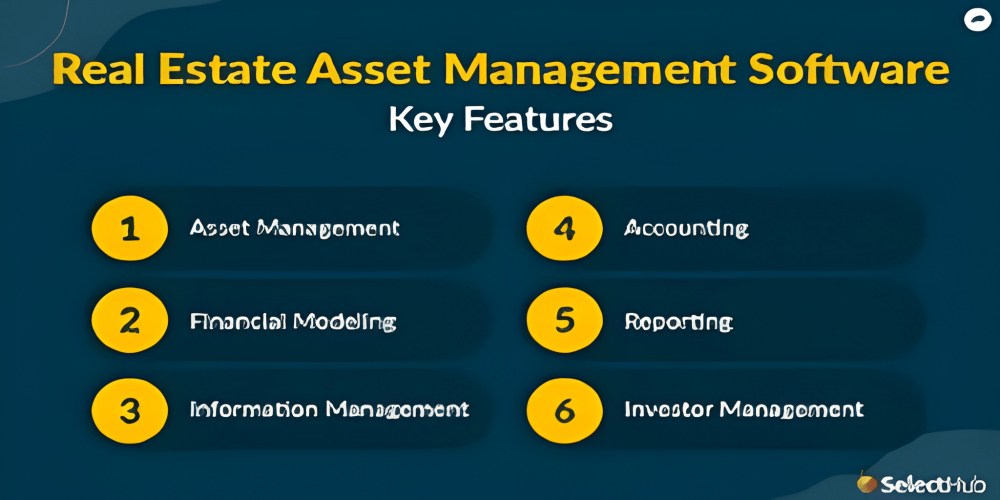
Key Features of Real Estate Asset Management Software
Not all software platforms are the same. However, the best-in-class real estate asset management solutions share several core features:
1. Property Performance Analytics
Gives detailed KPIs like net operating income (NOI), internal rate of return (IRR), occupancy rates, and more.
2. Lease Management
Tracks lease expirations, terms, tenant performance, and renewal timelines.
3. Document Management
Stores contracts, legal documents, property deeds, tax records, and inspection reports in a secure cloud-based system.
4. Budgeting and Forecasting
Allows predictive modeling and financial forecasting based on current and historical performance.
5. Capital Expenditure (CapEx) Planning
Tracks capital improvements, renovation schedules, and expenditure to enhance asset value over time.
6. Reporting and Dashboards
Generates real-time reports and visual dashboards to present data clearly to stakeholders and investors.
7. Mobile Access
Many software platforms now offer mobile apps so asset managers can access data on the go.
Benefits of Using Asset Management Software in Real Estate
Let’s take a closer look at the strategic and financial advantages this software offers.
1. Maximized ROI
By optimizing operations and minimizing costs, the software directly contributes to higher returns on investments.
2. Enhanced Collaboration
Cloud-based systems improve communication between asset managers, accountants, legal teams, and maintenance staff.
3. Portfolio Scalability
Easily scale your real estate portfolio without adding complexity. The software handles large volumes of data effortlessly.
4. Increased Transparency
Real-time reporting and audit trails increase visibility into asset performance and team accountability.
5. Investor Confidence
Professional-grade reporting builds trust with investors by showcasing thorough, data-backed asset management practices.
Who Should Use Real Estate Asset Management Software?
This software is beneficial for:
- Real estate investment trusts (REITs)
- Asset management firms
- Commercial real estate developers
- Private equity firms with real estate holdings
- Institutional investors
- Individual landlords with growing portfolios
- Property management companies expanding into asset optimization
Types of Real Estate Asset Management Software
Different types of software cater to varied needs depending on business size, asset types, and investment strategy.
1. Enterprise Software
Best suited for large firms and REITs with complex portfolios. It supports integration with ERP systems, CRMs, and accounting software.
Examples: Yardi, MRI Software, RealPage
2. SMB-Focused Software
Tailored for small to medium-sized businesses with simplified interfaces and cost-effective solutions.
Examples: Buildium, AppFolio, Re-Leased
3. Niche Solutions
Designed for specific asset classes such as commercial offices, retail spaces, or multifamily properties.
Examples: VTS (for commercial), Entrata (for student housing)
4. Custom-Built Platforms
Some large corporations develop in-house asset management systems to match their specific workflows and proprietary processes.
Key Considerations When Choosing Asset Management Software
Selecting the right software requires careful evaluation. Here are the factors to consider:
1. User Experience and Interface
A clean, intuitive interface reduces the learning curve and increases team adoption.
2. Integration Capability
Ensure the software integrates well with your current tools like CRMs, accounting systems, and BI platforms.
3. Customization
Your software should adapt to your workflow, not the other way around. Look for platforms with customizable dashboards, fields, and reporting.
4. Data Security
Choose vendors that offer end-to-end encryption, secure cloud hosting, and compliance with data privacy laws.
5. Scalability
As your portfolio grows, your software should grow with it without compromising speed or performance.
6. Customer Support and Training
Look for vendors that offer onboarding, technical support, webinars, and a resource library.
7. Cost Structure
Understand the licensing, monthly subscription, and hidden costs before committing. Consider the ROI the software brings.
Real Estate Trends Driving the Need for Asset Management Software
The increasing complexity of the real estate market has accelerated the adoption of technology. Some key trends include:
1. Remote Portfolio Management
Post-pandemic work models have led to a rise in remote teams managing real estate across geographies. Software is essential for seamless coordination.
2. Data-Driven Decisions
More real estate firms are moving toward data-backed investment and disposition strategies, requiring software that can analyze and interpret large data sets.
3. Sustainability Tracking
Green buildings and ESG (Environmental, Social, Governance) goals are gaining prominence. Asset management software helps track energy usage, carbon footprints, and compliance metrics.
4. AI and Predictive Analytics
Modern platforms are incorporating AI to predict maintenance issues, optimize lease pricing, and evaluate market trends.
Common Challenges Solved by Asset Management Software
1. Fragmented Data Systems
Multiple spreadsheets, paper files, and emails lead to disjointed data. Software centralizes all records for better accessibility.
2. Missed Lease Opportunities
The system can automatically notify managers of lease expirations, rent escalations, and options to renew or renegotiate.
3. Capital Expense Mismanagement
CapEx planning tools ensure you don’t overspend or miss important infrastructure upgrades.
4. Investor Communication Gaps
With powerful reporting tools, investor updates are faster and more professional.
Future of Real Estate Asset Management Software
Looking ahead, the future is bright and more intelligent. Anticipated developments include:
1. AI-Powered Insights
Software will evolve to not only track metrics but suggest actions through AI-generated recommendations.
2. Blockchain Integration
Blockchain may bring more secure leasing and transaction capabilities with tamper-proof contracts.
3. IoT and Smart Building Integration
Real-time data from smart buildings (temperature, usage, foot traffic) will integrate directly with asset management platforms for live asset monitoring.
4. Virtual and Augmented Reality
Remote inspections, virtual asset tours, and 3D models may soon become standard features within asset management systems.
Top 5 Real Estate Asset Management Software in 2025
Here’s a snapshot of some popular platforms used in the industry:
- Yardi Voyager – Ideal for large enterprises, highly customizable, with strong analytics.
- MRI Software – Great for global asset management with comprehensive modules.
- Re-Leased – Cloud-based platform for commercial property management and asset tracking.
- AppFolio Investment Manager – Focused on real estate investment workflows with investor reporting tools.
- Juniper Square – Popular with private equity and investment firms; strong CRM and fundraising tools.
Real Estate Asset Management Software Implementation Tips
Rolling out new software takes planning. Here's how to do it right:
- Define Your Goals – Clarify what you want to achieve (e.g., portfolio visibility, better reporting).
- Engage Stakeholders Early – Get input from everyone who’ll use the system, from accountants to leasing agents.
- Clean Your Data – Migrate clean, accurate data for smooth onboarding.
- Start Small – Test the software with one property or region before full rollout.
- Provide Training – Ensure your team is well-trained to make full use of the software.
Final Thoughts
Real estate asset management software is not just a convenience—it's a necessity in today’s competitive and data-driven property market. Whether you manage a handful of residential units or oversee a commercial portfolio worth millions, these platforms empower you with the tools needed to streamline operations, make data-driven decisions, and increase long-term asset value.
As technology continues to evolve, adopting a robust asset management system will put you ahead of the curve and provide the flexibility needed to grow and succeed in the real estate industry.
FAQs
Q1: What is the difference between property management and asset management software?
Property management software handles daily operations like rent collection, tenant communication, and maintenance scheduling. Asset management software, on the other hand, focuses on long-term financial performance, portfolio analysis, and strategic planning for real estate investments.
Q2: Is real estate asset management software suitable for small investors?
Yes. Many platforms like AppFolio and Re-Leased offer scalable, cost-effective solutions for small to medium investors. These tools can help track performance, manage leases, and make better investment decisions.
Q3: How much does real estate asset management software cost?
Costs vary based on features, number of users, and portfolio size. Monthly subscriptions can range from $100 for basic tools to thousands for enterprise solutions. It's important to assess ROI and long-term value when choosing software.



















Leave A Comment
0 Comment