
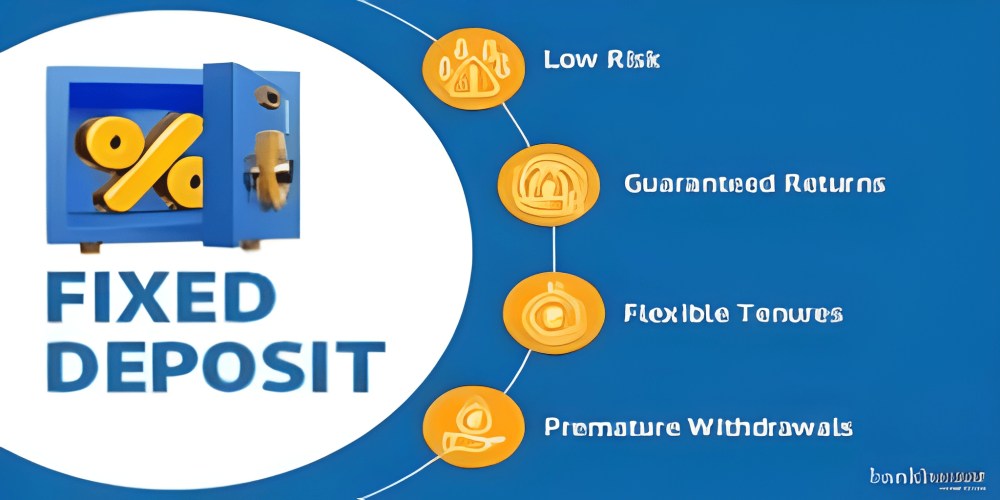
Fixed Deposits (FDs) have long been one of the most trusted and preferred investment options for individuals in India. They offer guaranteed returns, safety of capital, and a predictable income stream. Among all investment avenues, FDs are considered one of the simplest to understand and manage. One of the most important aspects of a fixed deposit is the interest rate, as it directly influences the returns an investor earns.
In recent years, the landscape of bank fixed deposit interest rates has witnessed several shifts, largely due to changes in monetary policy, inflation, and liquidity conditions in the market. This guide explores everything you need to know about bank fixed deposit interest rates, factors affecting them, how to choose the best FD, and strategies to maximize your returns.
What is a Bank Fixed Deposit?
A bank fixed deposit is a financial instrument offered by banks where you deposit a lump sum of money for a fixed tenure at a predetermined interest rate. At the end of the tenure, you receive the principal amount along with the accumulated interest.
FDs are considered safe because they are not linked to market fluctuations, unlike equities or mutual funds. The Reserve Bank of India (RBI) regulates banks, and deposits are insured up to a certain limit, which adds another layer of security.
Importance of Interest Rates in Fixed Deposits
The interest rate on a fixed deposit determines how much return you will earn. Higher interest rates mean higher earnings on your deposit. Even a small difference in rates can significantly impact the maturity amount, especially for long-term FDs or larger deposits.
For example, a difference of 0.5% in interest on a Rs. 5 lakh deposit over 5 years can lead to a difference of several thousand rupees in the maturity value. This makes it crucial to compare interest rates offered by different banks before investing.
How Bank Fixed Deposit Interest Rates Work
Bank FD rates vary depending on several factors such as tenure, deposit amount, type of depositor, and economic conditions. Typically:
- Tenure-based rates: Short-term FDs may offer lower rates compared to medium or long-term FDs.
- Depositor category: Senior citizens usually receive higher interest rates compared to regular investors.
- Deposit amount: Some banks offer preferential rates for higher deposits.
- Type of FD: Tax-saving FDs, recurring deposits, and special tenure FDs may have different rates.
Factors That Affect Bank FD Interest Rates
- Monetary Policy
The Reserve Bank of India’s monetary policy decisions, especially repo rate changes, influence how banks adjust their deposit and lending rates. When RBI hikes rates, banks often increase FD rates to attract deposits. - Inflation
Inflation impacts the real return on FDs. Banks adjust rates in response to prevailing inflation levels to remain competitive and attractive to investors. - Liquidity in the Banking System
If banks have surplus liquidity, they may not aggressively offer higher FD rates. On the other hand, when banks need funds, they increase rates to attract more deposits. - Competition
Private banks and small finance banks often offer higher FD rates than large public sector banks to attract customers. - Tenure of Deposit
Longer-tenure deposits often fetch higher interest rates compared to shorter ones, though this may vary depending on market conditions.
Current Trends in Bank Fixed Deposit Interest Rates
In recent times, bank FD rates have seen an upward trend due to policy tightening by the Reserve Bank of India. After a long period of low interest rates during the pandemic, most banks have started offering attractive FD returns again.
Public sector banks generally provide moderate rates, while private and small finance banks often offer comparatively higher returns to attract depositors. Investors now have a variety of options depending on their risk tolerance and financial goals.
How to Compare Bank FD Interest Rates
When comparing FD interest rates across banks, consider:
- Rate of Interest: Look at both regular rates and senior citizen rates.
- Tenure Options: Choose a tenure that aligns with your financial goals.
- Payout Options: Some FDs allow monthly, quarterly, or annual interest payouts, while others compound and pay at maturity.
- Premature Withdrawal Policy: Understand penalties or charges for breaking the FD early.
- Bank Reputation: Consider the credibility and stability of the bank.
Benefits of Investing in Bank Fixed Deposits
- Safety of Capital
Bank FDs are among the safest investment options, with guaranteed returns and insurance protection up to a specified limit. - Predictable Returns
Since FD rates are fixed, you know exactly what you will earn at the end of the tenure. - Flexible Tenure
You can choose FD tenure ranging from a few days to several years, based on your needs. - Higher Rates for Senior Citizens
Most banks offer additional interest rates, typically 0.25% to 0.75% higher, to senior citizens. - Loan Against FD
In case of emergencies, you can avail of a loan against your FD without breaking it. - Tax-Saving Option
Tax-saving FDs with a 5-year lock-in period qualify for deduction under Section 80C of the Income Tax Act.
Strategies to Maximize Returns on FDs
- Laddering Strategy
Instead of investing all money in one FD, split it across different maturities. This ensures liquidity and better interest rate management. - Mix of Banks
Consider diversifying across public sector, private, and small finance banks to balance safety and higher returns. - Senior Citizen Advantage
If you are a senior citizen, always opt for special senior citizen FD schemes to earn higher returns. - Reinvest Interest
Opt for cumulative FDs where interest is reinvested to benefit from compounding. - Monitor Rate Changes
Keep an eye on RBI policies and bank announcements. Lock in funds when rates are high.
Risks Associated with Bank FDs
- Inflation Risk
FD returns may not always beat inflation, leading to lower real returns.
- Premature Withdrawal Penalty
Breaking an FD before maturity usually attracts penalties and reduced interest rates. - Taxability of Interest
Interest earned on FDs is fully taxable as per your income tax slab, reducing post-tax returns. - Opportunity Cost
Over-investing in FDs might mean missing out on higher returns from equities or mutual funds.
Taxation on FD Interest
Interest earned on bank fixed deposits is taxable under “Income from Other Sources.” Banks also deduct TDS if the annual interest exceeds the specified limit (currently Rs. 40,000 for non-senior citizens and Rs. 50,000 for senior citizens). You can claim exemptions or file for a refund if your income is below the taxable limit by submitting Form 15G or Form 15H.
Who Should Invest in Bank FDs?
- Conservative Investors: Those who prioritize safety over returns.
- Senior Citizens: Benefiting from additional interest rates and stable income.
- Short-Term Savers: Individuals saving for short-term goals like tuition fees or travel.
- Emergency Fund Builders: FDs can act as a safe and accessible emergency corpus.
- Tax Savers: Those looking to save taxes under Section 80C through 5-year tax-saving FDs.
Alternatives to Bank FDs
While bank fixed deposits are safe, they may not always provide the highest returns. Alternatives include:
- Post Office Time Deposits: Government-backed, safe investments.
- Company Fixed Deposits: Offered by NBFCs, usually with higher interest but slightly higher risk.
- Debt Mutual Funds: Potential for better returns with market-linked risks.
- Public Provident Fund (PPF): Long-term investment with tax benefits.
- Recurring Deposits: For those who want to invest small amounts monthly.
Common Mistakes to Avoid in FD Investments
- Ignoring Inflation
Do not put all your savings into FDs, as real returns may be eroded by inflation. - Not Diversifying
Spreading money across different banks and tenures is better than locking all in one FD. - Premature Withdrawals
Plan tenure carefully to avoid breaking your FD and paying penalties. - Neglecting Tax Implications
Always factor in tax liability when calculating returns. - Not Reading Terms and Conditions
Always check for auto-renewal clauses, premature withdrawal rules, and hidden charges.
Future Outlook of Bank FD Rates
FD rates are closely tied to the economy. With inflation, global market conditions, and RBI’s stance on interest rates, FD rates will continue to fluctuate. In the near term, rates are expected to remain moderately high as central banks combat inflation. Over the long run, as the economy stabilizes, FD rates may soften again.
Investors should stay informed and lock in funds when rates are favorable.
Conclusion
Bank fixed deposit interest rates remain one of the most important factors for conservative and risk-averse investors. While FDs do not always deliver the highest returns compared to other asset classes, they provide stability, guaranteed income, and peace of mind. By carefully comparing bank FD interest rates, using strategies like laddering, and balancing investments with other asset classes, investors can make the most of this traditional yet reliable investment tool.
FAQs on Bank Fixed Deposit Interest Rates
Q1. What is the highest FD interest rate offered by banks currently?
Small finance banks and some private banks generally offer the highest FD interest rates, often above 7%, while public sector banks may offer slightly lower rates.
Q2. Do senior citizens get higher FD rates?
Yes, almost all banks offer additional interest rates, usually 0.25% to 0.75% higher, for senior citizens.
Q3. Can I withdraw my FD before maturity?
Yes, but banks usually charge a penalty and reduce the applicable interest rate in case of premature withdrawal.
Q4. Are FD interest earnings taxable?
Yes, interest from FDs is fully taxable as per your income tax slab. Banks also deduct TDS if the interest exceeds the specified annual limit.
Q5. Which is better: cumulative or non-cumulative FD?
A cumulative FD is better for long-term growth as interest is compounded, while a non-cumulative FD is suitable if you want regular income in the form of periodic payouts.
Q6. Can I get a loan against my FD?
Yes, most banks allow you to take a loan against your FD, usually up to 80-90% of the deposit value, at an interest rate slightly higher than the FD rate.
Q7. Are bank FDs completely risk-free?
Bank FDs are considered very safe, but deposits are insured only up to Rs. 5 lakh per depositor per bank under the Deposit Insurance and Credit Guarantee Corporation (DICGC).
Q8. Is it wise to invest all my savings in FDs?
No, it is advisable to diversify. While FDs are safe, they may not deliver inflation-beating returns. Combining FDs with mutual funds or other instruments is better for long-term wealth creation.
Q9. Do foreign banks in India offer FDs too?
Yes, foreign banks operating in India also offer FDs, though rates may differ compared to Indian banks.
Q10. What is a tax-saving FD?
It is a special FD with a 5-year lock-in period that qualifies for deduction under Section 80C of the Income Tax Act, up to a maximum of Rs. 1.5 lakh per year.





















Leave A Comment
0 Comment