
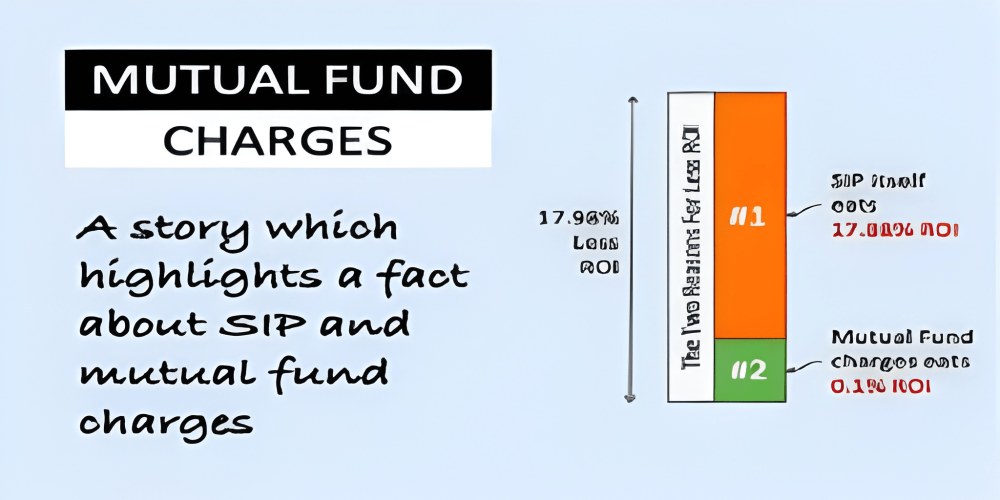
Mutual funds are often presented as an easy, convenient way to build wealth. They provide diversification, professional management and entry to markets that individuals could not tap easily on their own. Nevertheless, too many investors care only about return at the expense of an equally important factor: costs.
While most people are aware of expense ratios, there are many hidden mutual fund fees to avoid that quietly eat into your returns over time. These fees are not always clearly explained, and some investors do not realize their impact until years later when their portfolio underperforms expectations.
This detailed guide explains what these fees are, how they work, why they matter, and most importantly, how you can avoid them to protect your long-term investment growth.
Why Mutual Fund Fees Matter More Than You Think
At first glance, a fee of 1% or even 0.5% may seem insignificant. But when compounded over 10, 20, or 30 years, these costs can reduce your final corpus by lakhs or even crores.
The real problem is not just visible charges but hidden mutual fund fees to avoid that are deducted quietly from your investments. Because these fees reduce your net returns, you may never see them directly, but you will definitely feel their effect.
For long-term investors, understanding these costs is just as important as choosing the right fund category or asset allocation.
Expense Ratio: The Fee Everyone Knows but Few Understand
The expense ratio is the annual fee charged by a mutual fund to cover management, administration, marketing, and operational costs. It is expressed as a percentage of the fund’s assets.
While this fee is disclosed, many investors do not fully understand what it includes or how it affects returns.
An actively managed equity fund may charge an expense ratio of 1.5% to 2.5%, while a passive index fund may charge less than 0.3%. Over time, this difference becomes massive.
Although expense ratios are not always hidden, they form the foundation of many hidden mutual fund fees to avoid, because several indirect charges are bundled into this single number.
Exit Load: The Cost of Leaving Early
Exit load is a fee charged when you redeem your mutual fund units before a specified period. It is commonly seen in equity funds, where exiting within one year may attract a charge of around 1%.
Many investors overlook this fee at the time of investment. They assume they can withdraw money anytime without penalty, only to realize later that a portion of their capital is being deducted.
Exit load discourages short-term withdrawals, but for investors who need liquidity, it becomes one of the most common hidden mutual fund fees to avoid.
Entry Load: Mostly Gone, but Still Relevant Indirectly
Entry loads, which were charged when you invested in a mutual fund, have been officially banned in many markets, including India. However, that does not mean all entry-related costs have disappeared.
In some cases, distributors may recommend regular plans instead of direct plans, which indirectly increases your cost. While not labeled as an entry load, the impact on returns is similar.
This indirect cost structure makes it one of the less obvious hidden mutual fund fees to avoid.
Regular Plans vs Direct Plans: The Silent Cost Difference
One of the biggest hidden costs in mutual fund investing is the difference between regular and direct plans.
Regular plans involve commissions paid to distributors or advisors. These commissions are not billed separately; instead, they are deducted from the fund’s expense ratio. As a result, your returns are lower, but you may not realize why.
Direct plans eliminate distributor commissions and typically have lower expense ratios. Over the long term, this difference can significantly increase your wealth.
Choosing the wrong plan is one of the most expensive hidden mutual fund fees to avoid, especially for long-term investors.
Portfolio Turnover Costs: The Invisible Trading Expense
Portfolio turnover refers to how frequently a fund buys and sells securities. High turnover results in higher brokerage charges, transaction costs, and taxes.
These costs are not shown separately in your statement. Instead, they silently reduce the fund’s net asset value.
Funds with aggressive trading strategies often have higher turnover ratios, which increases these hidden costs. Investors focused only on returns may miss this important detail.
High turnover is a classic example of hidden mutual fund fees to avoid when selecting actively managed funds.
Brokerage and Transaction Charges Inside the Fund
Every time a fund manager buys or sells securities, brokerage fees and transaction costs are incurred. These are paid out of the fund’s assets.
Since these charges are embedded in the fund’s performance, investors never see them explicitly. However, they directly affect the fund’s returns.
Funds that trade frequently or invest in less liquid securities tend to incur higher transaction costs, making this another category of hidden mutual fund fees to avoid.
Cash Drag: The Cost of Uninvested Money
Many mutual funds keep a portion of their assets in cash or cash equivalents to manage redemptions or wait for investment opportunities.
While this may provide liquidity, it can reduce returns, especially in rising markets. Investors are effectively paying fees on money that is not fully invested.
This phenomenon, known as cash drag, is rarely discussed but can significantly impact long-term performance. It is one of the subtle hidden mutual fund fees to avoid that does not appear in any fee statement.
Soft Dollar Arrangements: Costs You Never See
In some markets, fund managers use soft dollar arrangements, where brokerage firms provide research or services in exchange for higher trading commissions.
Although this does not involve a direct charge to investors, the increased brokerage costs are ultimately borne by the fund.
Since these arrangements are complex and poorly understood, they fall under the category of hidden mutual fund fees to avoid, especially for investors who prefer transparency.
Marketing and Distribution Expenses
Mutual funds spend significant amounts on advertising, promotions, and distributor incentives. These costs are often included in the total expense ratio.
While marketing helps attract investors, it does not directly contribute to better fund performance. Yet, investors pay for it through reduced returns.
Funds with aggressive marketing campaigns often have higher expenses, making this one of the more common hidden mutual fund fees to avoid.
Switching Costs Within Fund Houses
Some asset management companies encourage investors to switch between schemes within the same fund house. While switching may appear free, it can trigger exit loads, tax liabilities, and opportunity costs.
Frequent switching can significantly reduce long-term returns, especially when done without a clear strategy.
These indirect costs make unnecessary switching another example of hidden mutual fund fees to avoid.
Tax Impact as an Indirect Cost
Taxes are not technically fees, but they act like one by reducing net returns. Capital gains taxes, dividend distribution taxes, and tax inefficiencies due to frequent trading can all lower your take-home returns.
Funds with high turnover or poor tax management can generate higher taxable events, making taxes an indirect but powerful cost.
Ignoring tax efficiency is one of the biggest hidden mutual fund fees to avoid for long-term wealth creation.
Fund of Funds: Double Layer of Fees
Fund of funds invest in other mutual funds rather than directly in securities. While they offer diversification and convenience, they come with a major drawback.
You end up paying two layers of expenses: one for the fund of funds and another for the underlying funds.
This double cost structure makes fund of funds one of the most obvious hidden mutual fund fees to avoid, unless there is a strong reason to invest in them.
Performance Fees and Incentive Charges
Some funds charge performance-based fees in addition to standard expenses. While this may align fund manager incentives with performance, it can also significantly increase costs during good years.
These fees are often complex and not well understood by retail investors. Without careful reading of the scheme documents, you may miss them entirely.
Performance-linked charges are another category of hidden mutual fund fees to avoid if transparency is your priority.
Redemption Processing and Account Maintenance Charges
In certain cases, especially with international or specialized funds, investors may face processing or maintenance fees.
These charges are not always highlighted during the investment process, making them easy to overlook.
Though individually small, they add up over time and fall under hidden mutual fund fees to avoid.
How Hidden Fees Impact Long-Term Wealth
To understand the true impact of hidden fees, consider this: two investors invest the same amount in similar funds, but one pays 1% more in total annual costs.
Over 20 years, the investor with higher costs could end up with 20–30% less wealth, even if both funds deliver the same gross returns.
This is why identifying and eliminating hidden mutual fund fees to avoid is critical for achieving financial goals.
How to Identify Hidden Mutual Fund Fees
The first step is awareness. Always read the scheme information document and key information memorandum carefully.
Look beyond headline expense ratios. Check portfolio turnover ratios, exit load structures, and whether the fund is a regular or direct plan.
Comparing similar funds within the same category can help you spot unusually high costs, which often signal hidden mutual fund fees to avoid.
How to Avoid Paying These Fees
Choose direct plans whenever possible to reduce commission costs. Prefer low-cost index funds or ETFs if they align with your investment strategy.
Avoid frequent switching and short-term investing unless absolutely necessary. Focus on funds with consistent performance and reasonable expense ratios.
Being disciplined and informed is the best way to protect yourself from hidden mutual fund fees to avoid.
The Role of Financial Advisors
A good financial advisor can help you navigate fee structures and select cost-efficient funds. However, ensure that the advisor is fee-only and not commission-based.
Commission-driven advice often leads to higher costs for investors, making advisor commissions another indirect example of hidden mutual fund fees to avoid.
Long-Term Strategy Beats Short-Term Decisions
Investors who focus on long-term goals and minimize costs generally outperform those who chase short-term returns.
Hidden fees compound quietly, just like returns. Reducing them is one of the simplest ways to improve your investment outcomes.
Understanding and avoiding hidden mutual fund fees to avoid is not about being overly cautious; it is about being smart and informed.
FAQs: Hidden Mutual Fund Fees to Avoid
What are hidden mutual fund fees to avoid?
Hidden mutual fund fees to avoid are indirect or less visible costs such as high expense ratios, distributor commissions, portfolio turnover costs, exit loads, and tax inefficiencies that reduce your net returns without being clearly highlighted.
Are expense ratios considered hidden fees?
Expense ratios are disclosed, but many underlying costs are bundled into them. Because investors often do not understand what they include, they can function like hidden fees.
How do regular plans increase costs?
Regular plans include distributor commissions within the expense ratio. These commissions lower your returns over time compared to direct plans.
Can index funds help avoid hidden fees?
Yes, index funds usually have lower expense ratios and minimal turnover, making them an effective way to reduce hidden mutual fund fees to avoid.
Do all mutual funds charge exit loads?
No, not all funds charge exit loads. Many funds waive exit loads after a specific holding period, while some categories have none at all.
How does portfolio turnover affect returns?
High portfolio turnover increases transaction and brokerage costs, which reduces the fund’s net returns over time.
Are fund of funds a bad investment?
Not always, but they involve double layers of fees. Investors should be cautious and understand the cost structure before investing.
Can hidden fees really impact long-term wealth?
Yes, even a small difference in annual costs can lead to significantly lower wealth over long investment periods.
How can I check for hidden fees before investing?
Review the scheme documents, expense ratio, turnover ratio, exit load details, and choose direct plans whenever possible.
Is it possible to eliminate all mutual fund fees?
No, some fees are necessary for fund management. The goal is to minimize unnecessary and excessive costs rather than eliminate fees entirely.
Final Thoughts
Mutual funds remain one of the most effective tools for long-term wealth creation. However, ignoring costs can turn a good investment into a mediocre one.
By understanding and avoiding hidden mutual fund fees to avoid, investors can significantly improve their net returns without taking extra risk.
In investing, what you keep matters more than what you earn. Reducing hidden fees is one of the smartest moves you can make on your financial journey.





















Leave A Comment
0 Comment